

Advertising Screen DC Charging Station: 40 kW, 60 kW and 80 kW
A DC fast charger normally earns nothing between charging sessions. The TA-DC-DD (X) is a floor-standing dual-gun DC charging station with a large vertical advertising display on the front: the 7-inch screen at the top handles charging, and the panel beneath it runs advertising. One cabinet, two charging guns, and a screen that keeps working when the cars have gone.
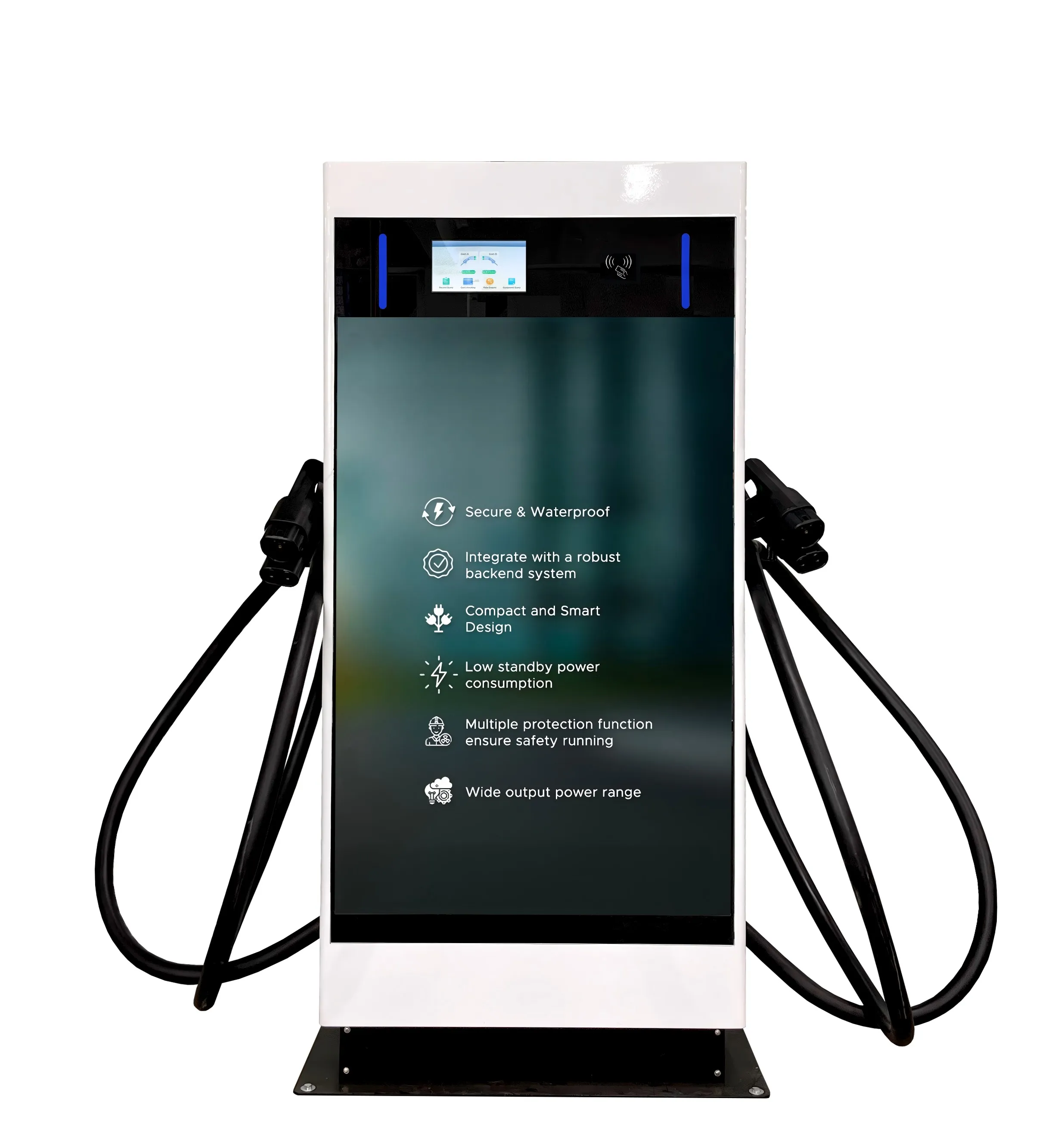
Two Guns, One Cabinet, One Advertising Panel
The station is built as a single floor-standing pedestal. Two charging guns sit in holsters on either side, with a 5-metre output cable per gun, so one unit covers two parking bays. The mounting base plate bolts straight to a prepared concrete foundation.
The front is where this model differs from a standard DC charger. Instead of a small interface panel, the fascia is dominated by a tall vertical display that can run dynamic video or static advertising, while a separate 7-inch control screen sits above it, flanked by blue LED indicator strips. A contactless card reader sits beside the control screen.
That split matters in practice: the driver-facing controls stay small and unambiguous, and the advertising surface stays large and visible — to the driver waiting in the bay, and to anyone walking or driving past.
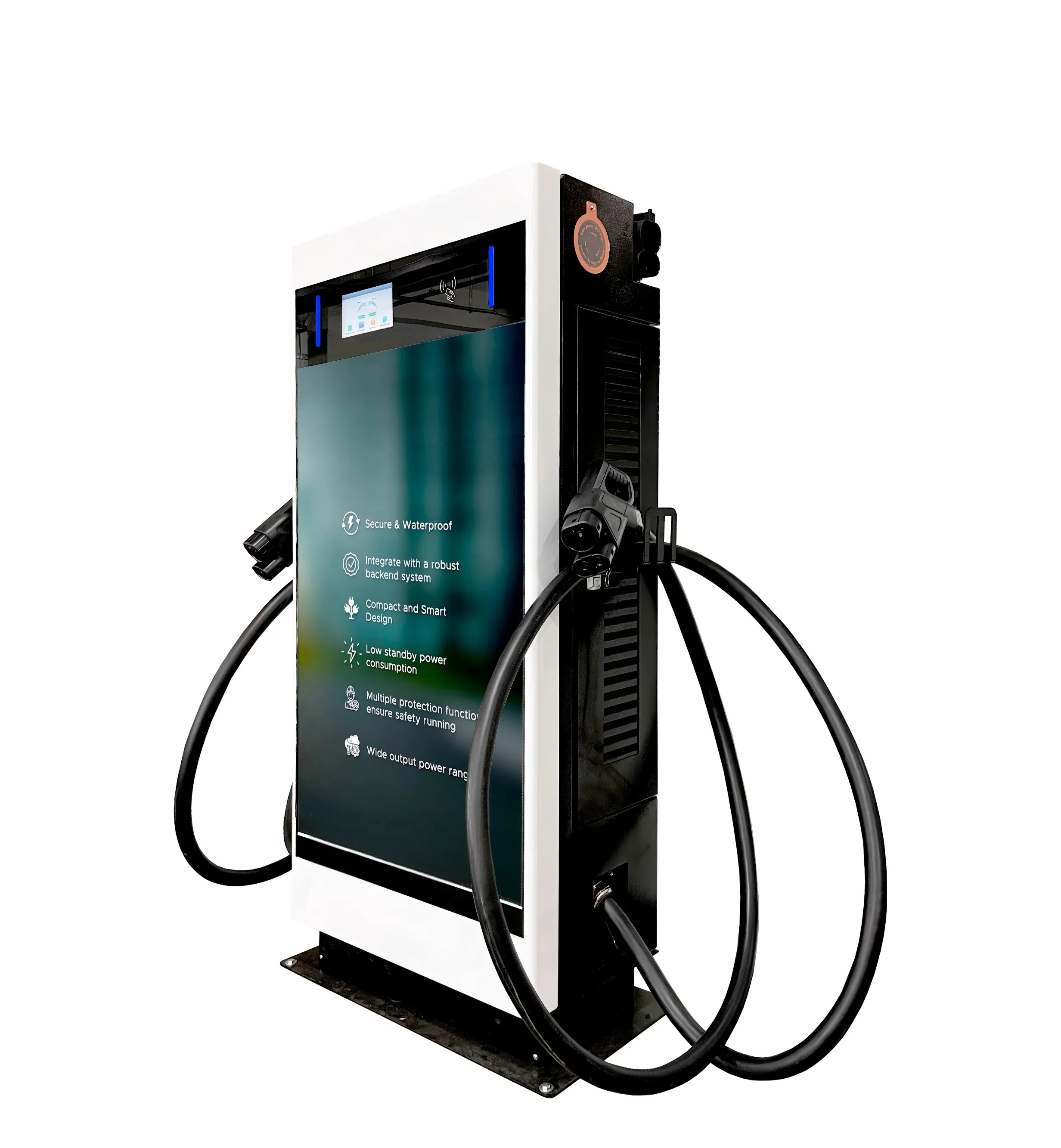
Power Options: 40 kW, 60 kW and 80 kW
The same cabinet is offered in three output configurations — 40 kW, 60 kW and 80 kW — all with a 200-1000 VDC output range and a 3P+N+PE three-phase input. A site can therefore specify the power it needs today and use the same footprint, foundation and cable route if it later moves to a higher-output unit.
The charging gun line is 5 metres as standard and the inlet cable length is 0 metres by default; both can be customized to suit the site layout.
Connector Options: CCS1, CCS2, GB/T and CHAdeMO
The station supports CCS1, CCS2, GB/T and CHAdeMO connectors, with charging protocols covering GBT27930, CHAdeMO 2.0 and DIN 70121, plus OCPP 1.6 (JSON) and ISO 15118. In plain terms: the same model can be ordered for a European, North American or Chinese vehicle fleet, and it can talk to a standard charging management platform.
For operators running a mixed fleet, the connector standard should be confirmed per site rather than per project — it is the most common reason a charger arrives that cannot plug into the cars on site.
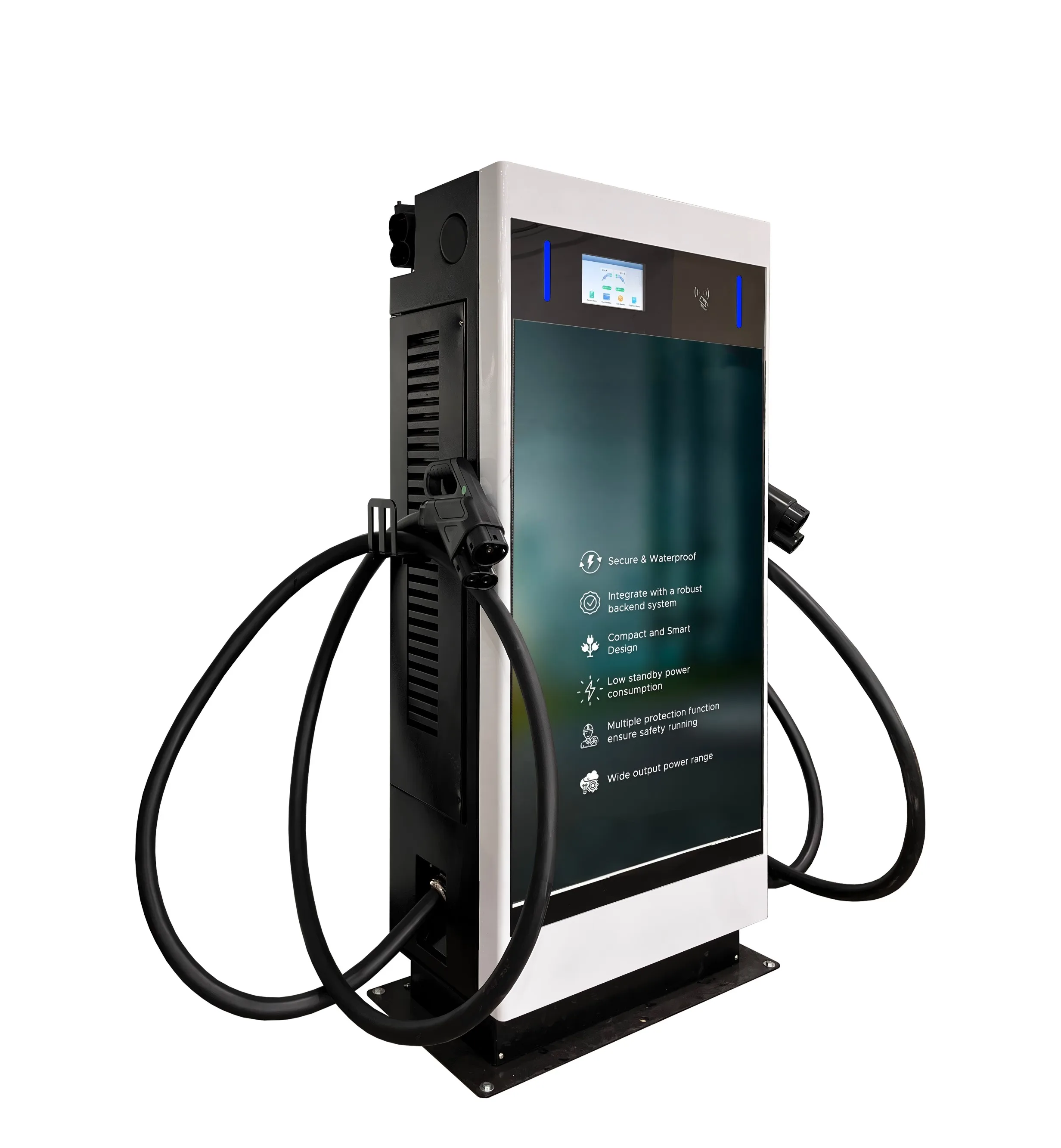
Charging Methods and Backend Integration
Four options are supported for starting and managing a session: swipe card, APP, OCPP, and load balancing (optional). With OCPP 1.6 (JSON) the station can be connected to a central management platform for remote monitoring, tariff setting and transaction records, while ISO 15118 support covers automated Plug & Charge workflows on compatible vehicles.
Load balancing is worth specifying where several chargers share an existing building supply: it lets the operator cap total site demand instead of paying for a larger grid connection.
Environmental and Structural Specifications
The enclosure is rated IP54, which suits covered outdoor parking, canopies and semi-sheltered bays. The cabinet measures 1350 × 690 × 240 mm and the package weight ranges from 198 kg to 242 kg depending on the power configuration, so a site survey should confirm access for delivery and a suitable lifting route to the installation point. The specification sheet carries the CE marking.
Technical Specifications
Values are transcribed from the product specification sheet; confirm the current ratings and certificate set for your chosen configuration and target market at the order stage.
Talk to Us About Your Site
Send us your parking layout, the connector standard your vehicles use, and whether you want to sell advertising space on the station, and we will confirm the right power configuration for your site together with the documentation you need for the project.
Contact:
Email: [email protected]
WhatsApp: +86 178 8500 3920
